 If you sell printables or low-content products, the fourth quarter isn’t just another season. For many shops, October through December produces more revenue than the rest of the year combined. Holiday spending in the United States runs close to a trillion dollars a year, according to the National Retail Federation, and every year a growing slice of it goes to digital and printable products: planners, gift tags, games, trackers, and decor a buyer can download tonight.
Here’s the catch. The sellers who cashed in during November did their creating in August and September. If you wait until you FEEL the holiday spirit, you’ve already missed the search wave.
This is your prep timeline. Work it in order.
Why You Have to Create 60-90 Days Early
Three separate clocks are running against you:
- Buyers shop earlier than you think. The National Retail Federation’s annual surveys consistently find that around 40% of holiday shoppers start buying before Halloween. Searches for Christmas products begin climbing in September.
- Marketplaces need runway. New listings take time to index, rank, and accumulate the early sales and reviews that fuel visibility. Etsy’s own Seller Handbook advises listing seasonal items well in advance so they gain traction before peak search volume hits. A listing published the week of Thanksgiving competes blind.
- You need production time. A coherent Q4 line (not one rushed product) takes weeks to design, photograph, and list properly.
Takeaway: your listing date and the buyer’s purchase date are two different seasons. Sell in November; build in August.
August: Build Your Halloween and Fall Line
 Halloween is Q4’s opening act, and it’s a printable-friendly holiday: parties, classrooms, and kids’ activities all run on paper.
Create now:
- Party printables: invitations, banners, cupcake toppers, “guess the candy” games
- Kids’ activities: coloring pages, mazes, word searches, pumpkin decorating templates
- Classroom packs: teachers buy Halloween activities in late September and October, often with their own money
- Fall (non-Halloween) items: Thanksgiving placecards, gratitude activities, fall bucket lists, and hosting planners. These sell straight through November.
One strategy note: bundle. A “Halloween classroom activity pack” at a higher price beats ten scattered single listings, and bundles are exactly what panicked party hosts and teachers want.
A second note on Halloween specifically: it’s the least “designed” of the Q4 holidays, making it the friendliest for beginners.
A party host searching at 9 PM for “Halloween bingo printable” wants functional and fun, not fine art. If Q4 is your first seasonal push, Halloween is the low-pressure warm-up before the Christmas main event, and everything you learn about your buyers in October compounds in November.
If you also sell in the education niche, your back-to-school listings are still working this month, too. See Your Back-to-School Product Timeline for how those two seasons overlap, and my step-by-step guide to SEL printables for kids for a classroom-friendly product line that sells all year.
September: Build Christmas, Gifting, and Planner-Season Products
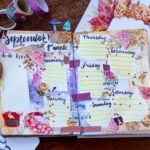 September is your biggest production month of the year. Three product families need to exist before October 1:
- Christmas and holiday printables. Gift tags, advent calendars, letter-to-Santa kits, elf printables, holiday party games, hosting planners, gift trackers, and budget sheets. This is the deepest, most-searched category in all of printables. Specific themes (a cabin-cozy aesthetic, a specific family situation, a niche hobby) beat generic “red and green set number 4,000.”
- Gift-adjacent products. Not everything Q4 is decor. Gift planners, Secret Santa organizers, “what I got everyone” trackers, and printable gift certificates for services (“this coupon is good for one oil change, Dad”) all ride the gifting wave. Remember that gift buyers are shopping for OTHER people’s interests, which opens up niches you don’t personally belong to.
- New-year planner season starts NOW. Dated 2027 planners, goal workbooks, habit trackers, and budget binders start selling in October and November as people pre-buy their fresh start. If your planners aren’t dated and listed by mid-October, you’re donating that market to sellers who planned. Students also come back for second-semester study tools; my post on creating in-demand study guides with AI covers that evergreen angle.
Refresh Last Year’s Listings (Don’t Let Them Rot)
If you sold seasonal products last year, you’re sitting on your most valuable Q4 asset: listings with reviews and sales history. Marketplaces reward that history, but only if the listing looks alive. Before October:
- Update every dated reference. A “2026 Christmas planner” title in November 2026 is fine; last year’s dated products need new versions listed now.
- Replace your weakest photo. Most sellers set photos once and never touch them. One improved main image can drive more clicks than any tag change.
- Re-check tags against this year’s language. Trends shift. The aesthetic that sold two years ago (“farmhouse”) may be losing searches to whatever replaced it. Spend ten minutes in the marketplace search bar, watching what autocompletes.
- Bundle old singles. Three aging Halloween listings can be consolidated into one fresh “Halloween party pack” listing with a new-listing boost and a higher price.
A morning spent refreshing beats a week spent building, if the bones are already there.
What NOT to Spend Time On
 Just as important as the build list is the skip list. In August and September, skip: products for holidays that just passed (obviously) but also Valentine’s and spring content (too early to rank, too late to matter); single-use party items priced under $3 unless they lead to a bundle; and any product idea that requires you to learn a new tool this quarter. Q4 rewards production speed in formats you already know. January is for experiments.
One caveat: if you’re reading this in October, you’re not too late for Christmas, but shift your energy to the second half of the list: gifting products, dated 2027 planners, and New Year content. Those windows stay open into December.
The Q4 Prep Checklist
Run this against your shop today:
- ☐ Halloween/fall line listed by September 1
- ☐ Christmas core line listed by October 1
- ☐ 2027 dated products listed by mid-October
- ☐ At least 2 bundles created from your singles
- ☐ Titles and tags written for gift searches (“gift for,” “for dad,” “stocking stuffer”) where relevant
- ☐ Last year’s seasonal listings refreshed (photos, keywords, dates) instead of being left stale
Takeaway: You don’t need 100 products. You need one coherent line per holiday, listed 60+ days early, with bundles.
A Note on Pricing for Q4
 Holiday buyers behave differently, and your pricing should reflect this. Two shifts are worth making before October. First, gift-context products support higher prices than self-purchase products; a printable buyer prints and wraps (“adventure voucher book for grandkids”) reads as a gift, not a file, and is judged against gift prices.
Second, bundles do their best work of the year in Q4 because holiday shoppers are buying for an event rather than an item. A $12 “complete Christmas hosting kit” sells to someone who would have balked at four separate $4 files. You’re not raising prices so much as matching how the season’s buyers already think.
One number worth knowing as you set expectations: digital products have no shipping deadline, so you can keep selling through December 23rd while physical sellers shut down. The last week before Christmas is a quiet windfall for print shops, made entirely of buyers who ran out of time.
Want the Full Season-by-Season System?
August and September are just the entry point. Every season of the year has its own version of this timeline, its own bestselling niches, and its own traps.
Succeed with Seasonal Printables is my complete program on exactly this: the top-selling seasonal printables and low-content niches all year long, and how to time them so you’re always selling into demand rather than after it. If Q4 is your first serious season, this will keep you from re-learning the calendar the expensive way.
The sellers having a great December aren’t going to be the most talented ones. They’re going to be the ones who started in August. That can be you, starting today.